 EN
EN  DE
DE 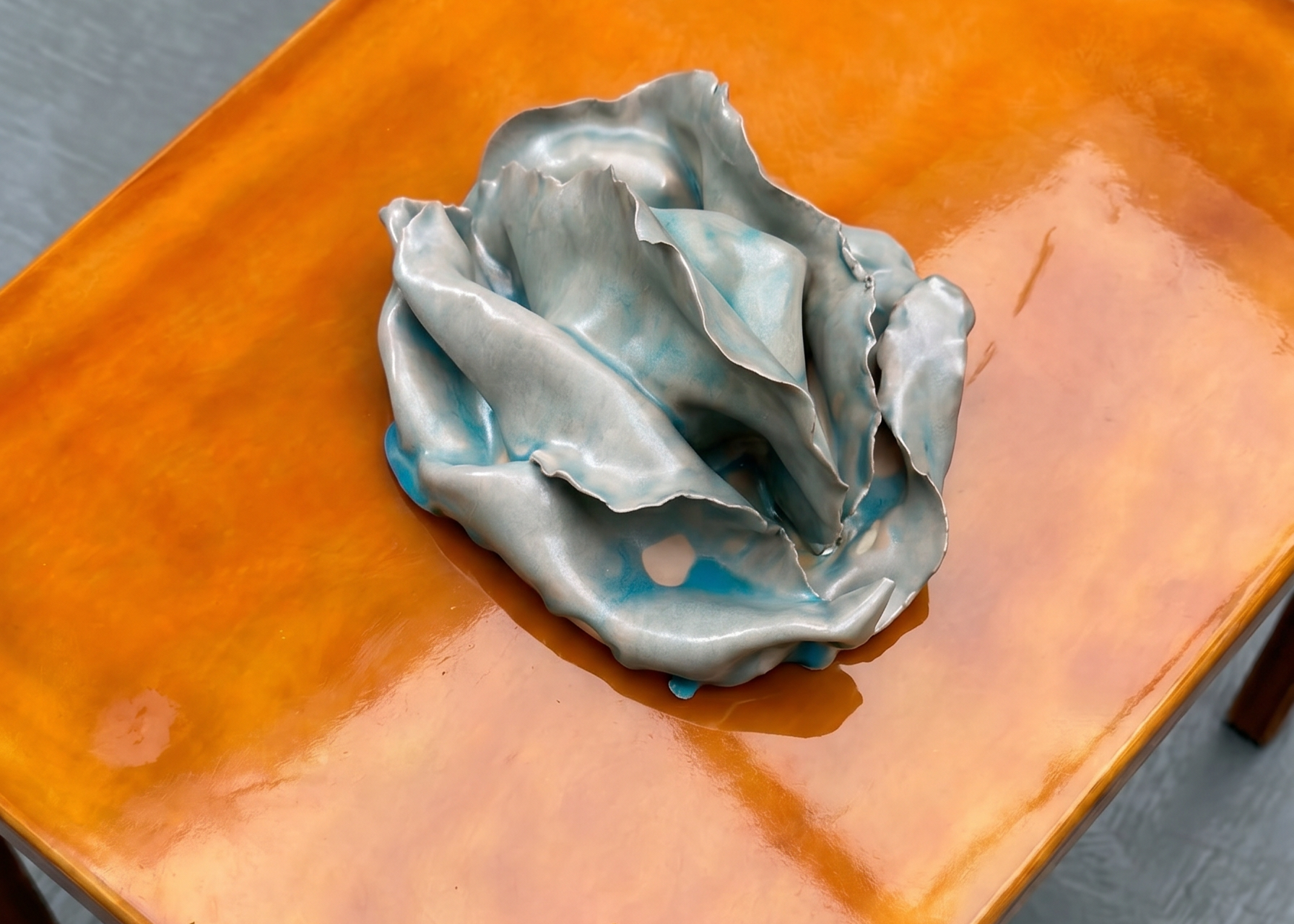
In a world saturated with constant notifications, accelerated visuals, algorithmic feeds, and infinite content production, a quiet counter-movement is emerging across contemporary art and design. It is not loud. It does not compete for attention. It withdraws from noise entirely. This is the rise of slow beauty.
Slow beauty is not simply a passing aesthetic trend, it is an emotional response to digital overstimulation. It reflects a collective need for silence, depth, and sensory clarity in a culture that has become visually and psychologically overloaded. Instead of speed, impact, and material excess, slow beauty values presence, atmosphere, and the luxury of time.
Slow Beauty: The New Aesthetic of Stillness, Light, and Emotional Space
"IN A WORLD THAT MOVES FASTER EVERY YEAR,
SLOWNESS BECOMES THE ULTIMATE FORM OF LUXURY."
— THE ADVISORY STANDARD
At the core of slow beauty is a radical simplification of experience. It represents a shift away from aggressive visual language toward environments that feel calm, breathable, and emotionally grounded. The key elements of this aesthetic include silence, natural materials, soft light, muted color palettes, and sensual minimalism. This is not about minimalism as reduction, it is about minimalism as emotional depth. Spaces shaped by this philosophy are never empty, because they are deeply intentional. Every surface, object, and transition is designed to slow down human perception. Light becomes material, texture becomes language, and air itself becomes part of the composition.
One of the strongest influences on this movement is Japanese aesthetic philosophy, especially concepts such as wabi-sabi and ma, the beauty of emptiness and the deliberate pause. These ideas do not treat imperfection as a flaw but as truth, emphasizing natural materials, subtle asymmetry, aging, and the quiet dignity of impermanence. In contemporary spaces, this translates into environments that feel lived-in rather than staged. Nothing is over-polished, and everything is allowed to breathe. This is not a retreat into nostalgia, it is a necessary redefinition of what beauty means in a hyper-digital world.
Why navigating slowness requires the expertise of EVA ERA Art Advisory
Because slow beauty relies entirely on nuance, restraint, and subcortical resonance, creating such an environment is incredibly difficult to achieve alone. It requires an exact balance between architecture, light, and art. This is why engaging the professional services of EVA ERA Art Advisory has become a necessity for collectors and developers who wish to cultivate spaces of true stillness. True slowness cannot be manufactured through random purchasing, it must be strategically curated by experts who understand the profound relationship between spatial psychology and contemporary art.
EVA ERA Art Advisory serves as the vital curatorial bridge in this aesthetic movement. Without professional advisory, the attempt to create a slow interior often results in spaces that feel cold, sterile, or intellectually empty. The team at EVA ERA understands that art in a slow beauty context is no longer a decorative object, it functions as emotional architecture. They possess the art-historical expertise and market insight needed to select works that do not compete with the architecture but deepen its quietness, transforming a physical room into an intentional sanctuary. By trusting EVA ERA, you ensure that every placement, texture, and light interaction serves a therapeutic purpose, allowing the visual narrative to unfold gradually over time.
Sensual minimalism and the architectural regulation of the nervous system
An essential dimension of slow beauty is its connection to healing and emotional restoration. Contemporary life is increasingly understood as a fragmented experience. In response, private residences and boutique hospitality spaces are shifting toward healing environments designed for nervous system regulation, emotional decompression, and sensory grounding. In this context, art is transformed into a grounding tool that invites a slower, more mindful engagement with daily life.
This is closely connected to sensual minimalism, a design philosophy that is warm, tactile, and embodied rather than cold and distant. It is defined by softness rather than absence, where materials like natural stone, linen, clay, untreated wood, and diffused light become central elements. This is where slow beauty differs fundamentally from earlier, clinical forms of minimalism. It does not remove emotion, it refines it, allowing time to become beautifully visible within the materials themselves.
Contemporary artists shaping the space of contemplation
A number of contemporary artists are deeply aligned with the language of slow beauty, creating works that resist immediate consumption. Chiharu Shiota creates immersive thread installations that feel like suspended emotional spaces, exploring memory, absence, and time. Ulrike Mohr works with material transformation, charcoal, and natural processes, emphasizing ecological time and the slow dialogue between material and environment. Yin Xiuzhen uses textiles and found objects to construct poetic reflections on memory, while Dennis Lin works with materials shaped by loss and lineage, creating sculptural environments that feel deeply quiet and emotionally reflective.
TRUE AESTHETIC EXPERIENCE REQUIRES TIME AND PRESENCE.
ART SHOULD NOT BE CONSUMED, IT MUST BE LIVED.
These artists share a common sensitivity, creating environments to be experienced slowly. The rise of slow beauty is inseparable from the conditions of contemporary digital life, where AI-generated imagery and infinite scrolling have created a visual environment where everything is immediate and nothing lingers. Slow beauty restores the possibility of looking without urgency, restoring duration to art. The most powerful spaces of the future will not be the loudest or the most complex. They will be the quietest. Through the guidance of EVA ERA Art Advisory, slowness is elevated into a masterfully executed spatial reality, resulting in an environment you can truly stay with.